




























Herringbone is one of the most requested LVT layouts in UK homes.
The zigzag arrangement of planks adds character to hallways, kitchens, dining rooms and living spaces, and it gives a floor a tailored finish that a standard straight lay can’t match.
Luxury vinyl tiles make the look more affordable and practical than real parquet, as they are water-resistant, easy to clean and hard-wearing.
The pattern does have one drawback. If the colour, plank size or surrounding décor isn’t chosen carefully, herringbone can make a room feel cluttered and smaller than it really is.
A few sensible design choices will keep the floor looking elegant and calm. Here is how to get it right.
Choose a Calm, Low Contrast Colour
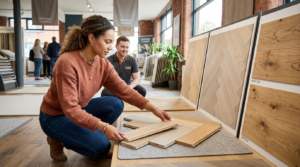
Colour variation between planks is the main reason herringbone can look busy. Every plank sits at an angle to its neighbours, so strong differences in shade, heavy knots and bold grain markings are repeated across the whole floor. Tonal, even designs keep the pattern visible without overwhelming the space.
Natural oak, soft grey, pale ash and warm honey tones are all reliable choices, as they show off the layout while letting furniture and décor take centre stage. Seeing various designs laid side by side helps a great deal, and a showroom such as Urmston Carpets lets you compare herringbone options in person before you decide.
A few tips will help you choose the right shade:
- View samples in a pattern: ask for several planks and arrange them in a herringbone shape, as a single plank won’t show how the colour behaves across a floor.
- Avoid high contrast in small rooms: heavily knotted or rustic designs suit larger spaces where the pattern has room to spread out.
- Check the bevel: planks with a pronounced dark edge create strong lines, so a micro bevel or square edge gives a softer look.
- Match your undertones: pick a warm or cool shade that suits your walls and cabinets.
Pick the Right Plank Size for the Room
Plank size has a big effect on how busy the pattern appears. Small, narrow blocks create lots of joins and a more intricate look, which can feel crowded in a compact room. Longer, wider planks produce fewer lines, so the pattern reads as calm and spacious even across a large floor.
As a general guide, choose medium-to-large planks for open-plan kitchens, living rooms and long hallways, where a bigger format keeps the floor feeling ordered. Smaller blocks can work well in a period property or a room with high ceilings, as the extra detail suits traditional features such as cornicing and panelled doors.
If you’re unsure, lay out samples in both sizes on your floor and view them from the doorway, as that is the angle you’ll see most often.
Set the Pattern Direction to Suit the Space
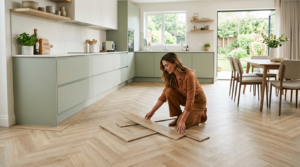
The direction of the herringbone changes how the room feels. Running the pattern along the length of a hallway draws the eye towards the far end and makes the space look longer and tidier. For living rooms and kitchens, pointing the pattern towards the main window or garden doors creates a clear line through the room and makes the layout feel intentional.
Careful setting out also avoids an awkward finish at the edges. Ask your fitter to centre the pattern on the main doorway, a fireplace or a kitchen island, so it looks balanced from the most visible point. Planning the cuts helps prevent thin slivers of plank against one wall and wide pieces against the other.
Carrying the pattern in one continuous direction through connecting rooms also reduces visual breaks and helps the floor feel calm.
Use Borders and Plain Surroundings to Frame the Pattern
A simple border around the edge of the room can make herringbone look neat and contained. One or two rows of straight planks in the same or a slightly darker shade frame the pattern and hide walls that aren’t perfectly square.
Borders work especially well in open-plan areas, where they can mark out a dining zone or kitchen without adding another floor type.
The rest of the room matters too. Keep these points in mind:
- Do choose plain or subtly textured rugs, curtains and upholstery.
- Do keep wall décor and colours soft and simple so the floor has space to stand out.
- Don’t pair herringbone with heavily patterned wallpaper in the same room.
- Don’t add busy tiles or splashbacks right next to the floor without testing samples together first.
Keep Herringbone Simple in Bathrooms and Small Rooms
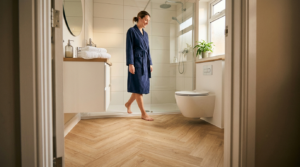
Herringbone LVT can look lovely in bathrooms, en-suites and cloakrooms, if the design is kept restrained. Many people asking what the best flooring for a bathroom is surprised to learn that LVT is a strong option, since it is waterproof, warm underfoot and comfortable to stand on after a shower. Glue-down fitting is usually recommended in these rooms, as it creates a firm bond with the subfloor and works efficiently with underfloor heating.
Compact rooms need extra care to stop the pattern feeling crowded. Choose a light, even shade and a larger plank, which keeps the number of joins down and helps the room feel more open. Limit other patterns by keeping wall tiles plain and large format and let the floor be the main feature. If you’ve been researching what the best flooring for a bathroom with a small footprint is, a pale herringbone LVT paired with simple white sanitaryware is a practical and stylish answer.
Ask your fitter to seal around the bath, shower tray and toilet so water can’t reach the subfloor.
Order Herringbone Samples and See the Pattern in Your Room
Herringbone LVT can add real style to your home without overwhelming it. Choose a calm, low contrast colour, match the plank size to the room, set the pattern in a clear direction and keep the surrounding décor simple. Borders and restrained colour choices will help the floor look polished in every space, from open plan kitchens to compact bathrooms.
Before you commit, order a few samples and arrange several planks in a herringbone pattern on your own floor. Look at them in daylight and in the evening, and check how they sit alongside your walls, cabinets and furniture. Once you’ve found a design you love, book a measure so your fitter can plan the layout and give you an accurate quote for a floor that looks good for years to come.