


























Summary:
- According to climate models from the Met Office UK Climate Projections (UKCP18), the UK is facing warmer, wetter winters and hotter, drier summers, accompanied by an increase in the frequency of extreme weather events.
- Data published in the UK Health Security Agency (UKHSA) Climate Change Risk Assessment reveals that climate-driven risks—ranging from severe heat stress to localized surface water flooding—pose direct threats to public health and residential infrastructure.
- High-performance double glazing can improve year-round thermal comfort by reducing heat loss in winter and helping keep unwanted heat out during summer. Around 18% of an uninsulated home’s heat can be lost through windows.
Top 10 Ways to Adapt to Climate Change in the UK
1. Retrofit Property Thermal Envelope & Windows

UK properties are traditionally engineered to retain heat, making them susceptible to seasonal temperature swings. Retrofitting homes with high-grade thermal insulation and low-emissivity (Low-E) double glazing prevents winter heat loss while reflecting intense summer solar radiation.
- Research & Statistics: Building performance evaluations from the Energy Saving Trust Home Energy Hub confirm that proper window retrofits and thermal insulation reduce household energy consumption by up to 30%, creating a stable indoor climate across summer heatwaves and winter freezes.
- Environmental Impact: Drastically cuts space heating and cooling carbon emissions over the property’s lifecycle.
- Best For: Homeowners, landlords, and property energy retrofits.
2. Transition to On-Site Renewable Energy Generation

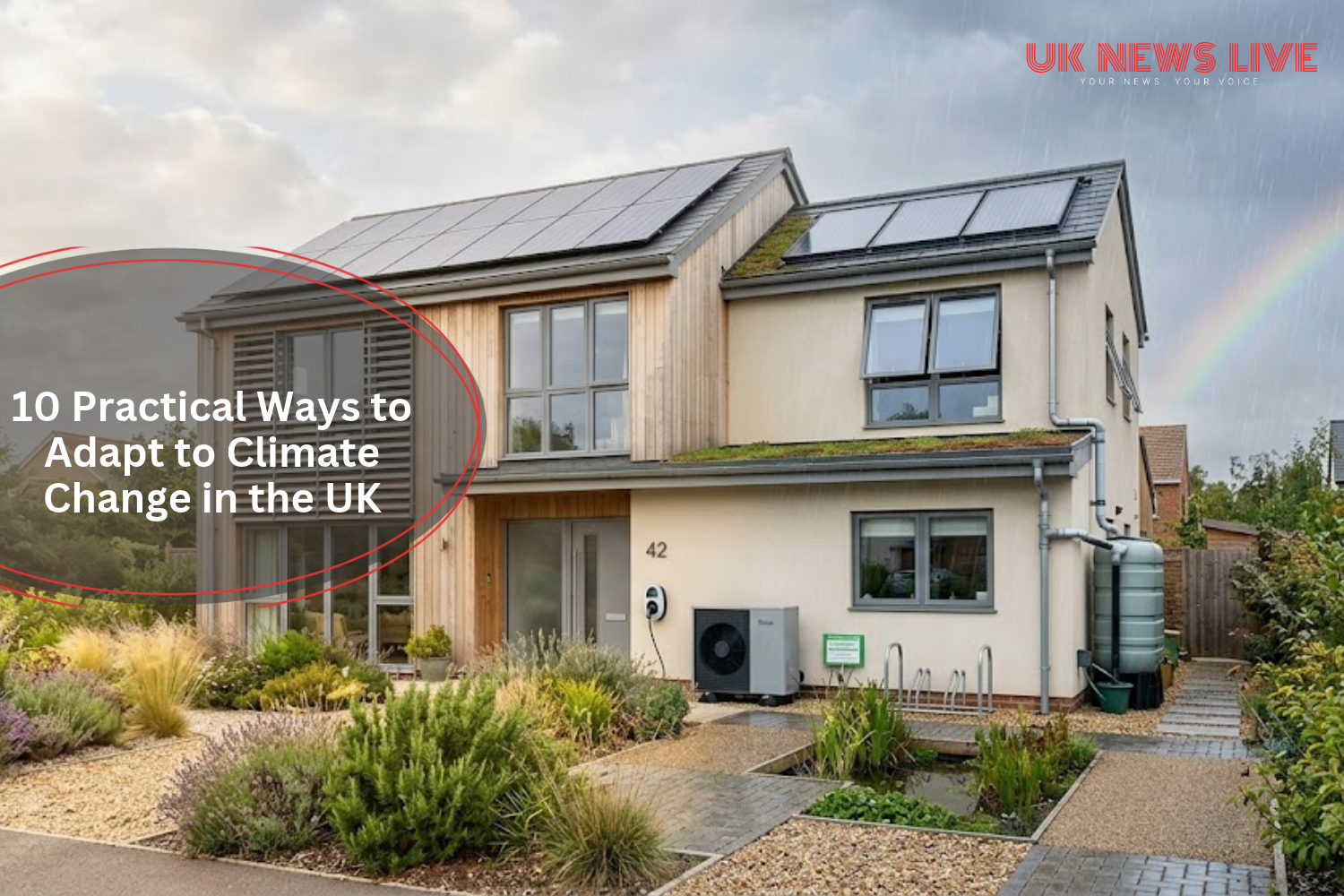
With fluctuating energy markets and global efforts to reduce carbon reliance following the fossil fuel impact of the COP28 climate deal, installing residential rooftop solar panels allows households to generate clean, decentralized electricity directly on-site.
- Research & Statistics: Financial and environmental metrics on the costs and ROI of residential solar panels in the UK show that rooftop solar systems can cover up to 60%–70% of annual household electricity needs, offsetting grid electricity demands during summer peak cooling and winter heating periods.
- Environmental Impact: Generates 100% renewable power, lowering household carbon footprints.
- Best For: Suburban properties, detached homes, and urban rooftops.
3. Maintain Indoor Air Quality During Extreme Weather

Extreme weather events—such as summer heatwaves requiring closed windows, or winter periods with reduced natural ventilation—lead to indoor air stagnation, mold risk, and particle accumulation. Using HEPA air purifiers maintains healthy indoor environments during climate lockdowns.
- Research & Statistics: Environmental health insights detailing how an air purifier removes unhealthy pollutants at home indicate that high-efficiency particulate air (HEPA) filtration removes 99.97% of dust, mold spores, pollen, and airborne micro-particles when natural ventilation is restricted.
- Environmental Impact: Consumes low wattage while safeguarding indoor respiratory health without requiring heavy mechanical HVAC air conditioning.
- Best For: Bedrooms, home offices, and urban homes affected by seasonal pollen or pollution spikes.
4. Optimize Home Electrical & Appliance Efficiency
Adapting to climate change involves reducing baseline electricity usage to lower household utility bills and lessen pressure on the national energy grid during peak demand events.
- Research & Statistics: Practical consumer guidance shows that switching to LED lighting, eliminating phantom standby loads, and choosing high-efficiency appliances can help reduce annual domestic energy consumption and household costs.
- Environmental Impact: Reduces fossil-fuel grid draw and decreases overall household energy demand.
- Best For: Renters, budget-conscious families, and eco-friendly households.
5. Adopt Smart Appliance & Household Electrical Choices
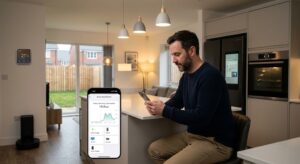
Transitioning to low-energy household electronics, smart thermostats, and energy-conscious appliances allows homes to automatically optimize power consumption based on real-time climate conditions and energy tariffs.
- Research & Statistics: Industry research highlights the growing role of smart technology in managing household energy use. With 75% of Great Britain’s properties now equipped with smart electricity meters, smart power management and energy-efficient, low-wattage devices can help households monitor consumption, shift usage away from peak periods, and manage energy costs more effectively during seasonal demand surges.
- Explore more examples of AI-powered solutions in our guide to Top AI Smart Home Devices.
- Environmental Impact: Minimizes operational carbon footprints and prevents waste heat emissions inside living spaces.
- Best For: Home offices, kitchens, and modern smart homes.
6. Install Rainwater Harvesting & SuDS Management

Climate projections indicate a significant increase in summer droughts alongside heavy, short-duration winter downpours. Combining rainwater collection butts with Nature-Based Solutions helps control stormwater runoff and prevent localized flash flooding.
- Research & Statistics: Water management data from the CIBSE Guidance on Sustainable Drainage Systems reveals that residential rainwater collection can reduce domestic mains water demand by up to 40%, while permeable paving prevents localized surface water flooding.
- Environmental Impact: Relieves municipal storm sewer pressures and reduces treated mains water consumption.
- Best For: Garden properties, driveways, and residential patio areas.
7. Implement Passive Night Purge Ventilation
During summer heatwaves, heavy masonry in UK homes absorbs daytime heat and radiates it indoors overnight. Opening windows on opposite sides of the house after sunset creates a natural thermal flush.
- Research & Statistics: Thermal modeling published in the NCBI Study on Indoor Thermal Comfort & Airflow confirms that nighttime cross-ventilation increases room air exchange by 300%, lowering structural indoor temperatures by up to 4°C without energy consumption.
- Environmental Impact: Operates with zero electricity, replacing energy-intensive air conditioning units.
- Best For: Two-story houses, townhouses, and upper-floor apartments.
8. Cultivate Climate-Resilient Gardens & Urban Greenery

Replacing impermeable concrete yards with biodiverse lawns, vertical climbing plants, and drought-tolerant foliage mitigates the urban heat island effect while supporting local ecosystems.
- Research & Statistics: Environmental research from the RHS Gardening in a Changing Climate Report proves that plant evapotranspiration cools local surrounding ambient temperatures by 2°C to 5°C, while root structures absorb surface rainwater runoff.
- Environmental Impact: Fosters urban biodiversity, mitigates heat retention, and captures atmospheric carbon.
- Best For: Patios, gardens, balconies, and exterior brick walls.
9. Optimize Hydration & Seasonal Dietary Habits

Adapting to higher summer temperatures requires personal health adjustments. Replacing heavy, heat-intensive cooked meals with hydrating, raw, nutrient-rich foods helps maintain internal core temperature balance.
- Research & Statistics: Public health guidelines from the NHS Official Hot Weather Health Guidance recommend consuming 2.5 to 3 litres of fluid daily during extreme heat, while prioritizing water-dense foods like cucumbers and melons to replenish lost electrolytes.
- Environmental Impact: Reduces kitchen gas and electricity usage by avoiding oven cooking during hot summer periods.
- Best For: Personal health protection during high summer heat can be supported with the right wellness apps, which can help users monitor hydration, activity, sleep, and overall well being.
10. Practice Safe Body Temperature Management
During periods of extreme heat, rapid core cooling is essential. Applying cool or lukewarm water (18°C to 20°C) directly to arterial pulse points provides effective, shock-free thermal relief.
- Research & Statistics: Medical first-aid advice from the British Red Cross Heat Exhaustion Guidance demonstrates that cooling pulse points at the wrists, neck, and temples rapidly cools circulating blood without triggering cold-water vasoconstriction.
- Environmental Impact: Consumes minimal water compared to prolonged cold showers, saving energy and water resources.
- Best For: Immediate cooling after commuting, exercise, or outdoor exposure.
Making Smarter Choices for the Future
Choosing sustainable brands helps reduce waste, lower emissions, and support ethical businesses. By making informed choices, you can help create a greener future while enjoying quality products.
Have a sustainability hack for our audience?
We’re always looking to discover innovative ideas making a real environmental impact. Get in touch and help us keep our readers up to date.
Top 6 Frequently Asked Questions (FAQs)
1. What are the most urgent climate adaptation priorities for UK homeowners?
The most urgent priorities include improving property insulation and window glazing to guard against temperature extremes, installing rainwater drainage or permeable surfaces to prevent flash flooding, and adopting renewable energy systems to improve power independence.
2. How does double glazing help adapt to both winter cold and summer heatwaves?
Modern double glazing features insulated glass units treated with Low-E coatings. In winter, it reflects interior heat back into the room to prevent heat loss; in summer, it blocks solar radiation from entering glass, preventing the indoor greenhouse effect.
3. Can rooftop solar panels function effectively during cloudy UK weather?
Yes. Modern photovoltaic (PV) solar panels generate electricity from ambient daylight rather than direct heat or unbroken sunlight. While peak output occurs on bright days, solar panels continue generating clean power during typical overcast British weather.
4. How does environmental engineering help manage localized climate risks?
Environmental engineering combines nature-based drainage, green corridors, and habitat management to absorb excessive stormwater runoff, reduce urban heat islands, and protect regional biodiversity from sudden weather shifts.
5. Does using air conditioning during heat waves worsen climate change?
Yes, frequent or inefficient air-conditioning use can contribute to climate change because it increases electricity demand and some cooling systems use refrigerants that can have a warming effect. However, AC can also provide important protection against dangerous heat. Using energy-efficient systems, setting a moderate temperature, and combining AC with shading, insulation and natural ventilation can reduce its environmental impact.
6. How can you stay healthy during a heatwave without relying only on air conditioning?
Stay hydrated, avoid strenuous activity during the hottest parts of the day, use curtains or blinds to block direct sunlight, ventilate your home when outdoor temperatures are lower, and spend time in a cool or shaded place. WHO also recommends keeping homes cool through shading, ventilation and appropriate cooling methods.
3. Can extreme heat affect your health even when you stay indoors?
Yes. High indoor temperatures can increase the risk of heat exhaustion, heatstroke and cardiovascular problems, particularly among older people and other vulnerable groups. Keeping indoor spaces cool through ventilation, shading, insulation, fans or air conditioning can help reduce these risks.