



























There are some persistent myths around travelling, especially when it comes to budgeting.
We were once led to believe that Airbnb was a cheaper, ethical alternative to large hotel chains. Then, Airbnb investors broke local rental markets and now the opposite looks true. In fact, many are returning to the simple pleasures of hotels, like the reception, 24/7 check-ins and room service.
Something similar has happened with travel agents. The myth that DIY travel (often using Airbnb) is cheaper, yet more personal. Sometimes this is true, but often it’s the opposite.
When the trip has too many moving parts
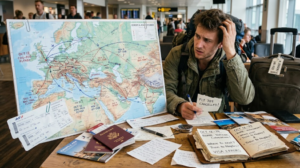
Most trips have a tipping point where the number of interconnected pieces makes it chaotic to manage alone. A 3-day nearby city break means DIY makes sense: one flight, one hotel, the metro. Once you add two more destinations, complexity goes up by several orders of magnitude.
Nightly accommodation can change, and the more interconnected travel there is, the more chance of something going wrong. No one booking is the problem – it’s the chain, and when one domino falls, it can have a knock-on effect on the whole trip. One cancellation means missing the next connection, and suddenly you miss your check-in window.
At this point, it would have been cheaper to guarantee your connection with private transfers, something a travel agent would have organised. A travel agent may also help fix the situation when it goes wrong via support. Money aside, this is supposed to be a holiday… You should be nowhere near a Gantt chart or project folders.
Specialist knowledge goes deeper than any search engine
Just as one person’s DIY trip-booking abilities vary from another person’s, you have generalist travel agents and specialist agencies. A generalist will book your flight and hotels for you, and that might be something you’re up for replicating yourself (though sometimes these agencies do have access to better deals).
Specialists aren’t just putting together the flight and hotel, but are packaging up the whole experience. Something thought-through. They’re also there for ongoing support.
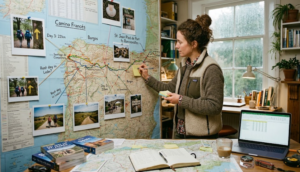
A good example is when booking walking holidays like the West Highland Way or Camino de Santiago. A specialist like Orbis Ways will put together itineraries from on-the-ground intelligence. They will have connections to the place you’re booking and iterate, year on year, at perfecting their package holidays. Generalists are so broad that they don’t always improve on feedback (because they have too many combinations and novel packages).
If there has been some coastal erosion that has closed down a part of a trail, it’s the specialist who will learn about this right away and adapt. That knowledge doesn’t just make a trip smoother, but changes what the trip actually is.
When your time is worth more than you think
DIY travel is free in monetary terms (though, again, you’re often less covered in the event of things going wrong). If everything goes right, it might be cheaper. But not when factoring in time.
The average traveller spends two full working days putting together a trip. That’s several hundreds of pounds worth of wages. Sometimes it’s longer if the person doesn’t trust themselves or they’re inexperienced and, even then, they’re full of anxiety.
An agency front-loads all of that work for you. You’re buying back your own time. The only caveat here is if you enjoy the research and back your booking abilities.
When you’re travelling solo
Solo travel is huge, and growing. But the logistics have their own unique friction that an agency could help with. Single-room supplements, when negotiated by yourself, can be very expensive. You’re not getting the scaled benefits of having 8 of you book an Airbnb.
This is where agencies that have relationships with accommodation can reduce or even restructure that cost. Then there’s the support, which is more important than ever on a solo trip. Without a companion, you will be thankful to have a 24/7 hotline to call when complications arise.
When something might go wrong
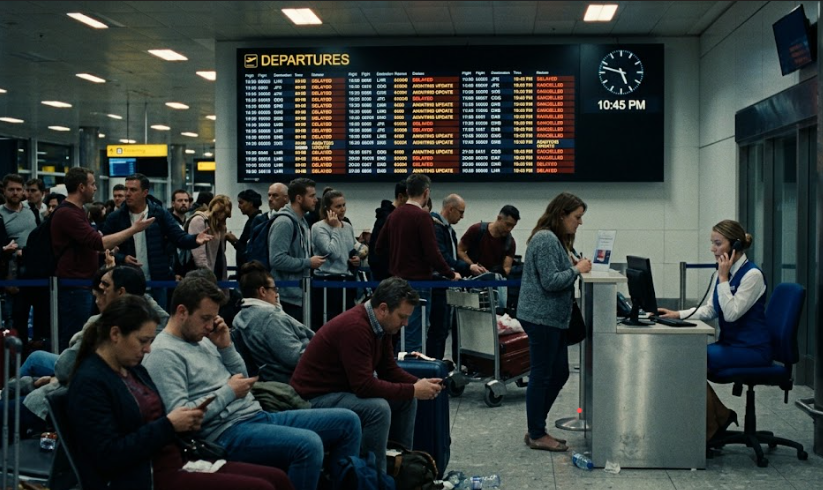
It’s understandable that some people stand by their DIY bookings. And fair enough, it can sometimes be cheaper when everything goes smoothly. But when something goes wrong, agencies are where you really get your money’s worth.
In 2024, 3.4 million UK air passengers had a delay or cancellation. That’s around one in three people each year. That’s not including accommodation cancellations like overbooking, trail closures, sudden illness or a missed connection in a city you don’t know.
Travel insurance can certainly help, but an agency has your back operationally. It’s a different kind of protection. They make it more likely that you can recover a bad day into a decent one, even if it is a reroute at 9 pm. When you’re in an unfamiliar country, calling someone to help solve an issue is worth its weight in gold.
Not every trip needs an agency, especially for experienced travellers or those on extreme budgets. A simple city break is a good example, where you simply find the cheapest budget hotels or flights that weekend and hop on. But a big holiday (your annual family vacation or a long, multi-day hike) and suddenly the specialist knowledge and pre-booking can save you many hours and tears.