



























Summary
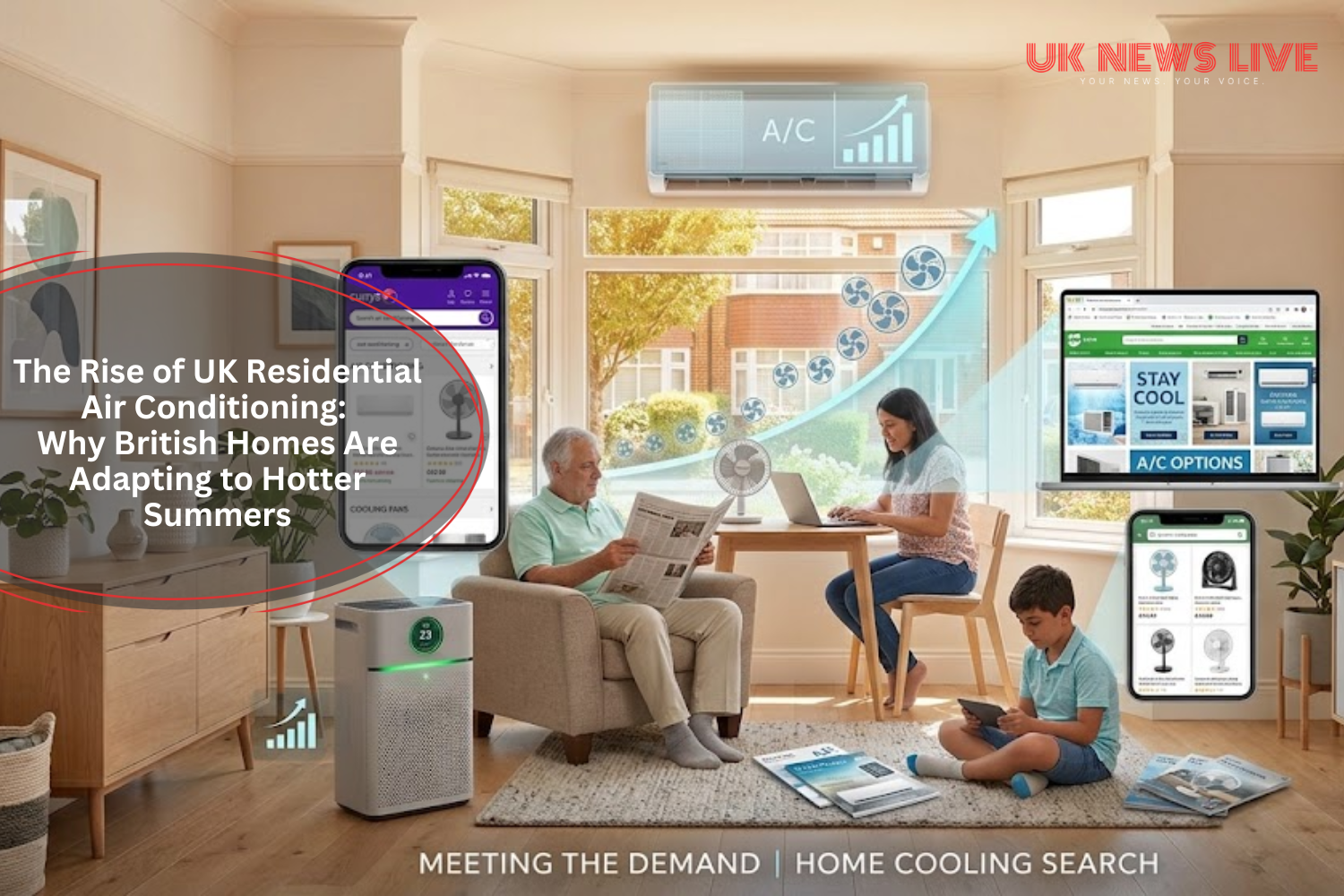
- Doubling Domestic Uptake: Around 4 million UK homes now rely on air conditioning—double the figure from three years ago. Broad-scale research by the University of Reading through the Energy Demand Research Centre study on UK homes reveals that 4.3% of homes in England currently feature installed AC systems.
- Severe Overheating Risks: According to a report by the Centre for British Progress on UK air conditioning, 50% of British properties suffer from summer overheating due to traditional winter-focused insulation. Recent statistics from the Met Office UK climate report recorded a record May high of 35.1°C at Kew Gardens, following the UK’s warmest summer on record in 2025.
- Surging Property Buyer Demand: Property market data from Rightmove property market trends indicates a 104% surge in buyer searches for homes with air conditioning, with 87% of buyers listing a property’s ability to stay cool as a primary consideration.
- Evolving Consumer Spending: Retail analytics from Debenhams online store stats showed a 232% year-on-year jump in cooling sales, paired with a 4,442% spike in searches for “air con” and a 1,165% increase for fans during extreme summer heat spikes.
- Hybrid Work Productivity: The permanent shift toward remote and hybrid work means millions of UK professionals now face peak daytime temperatures at home, accelerating demand for permanent split-system ACs to protect productivity.
Why Is Air Conditioning Becoming More Popular in the UK?

The UK’s traditional approach to summer cooling has relied heavily on opening windows, closing curtains and blinds, running fans, and making use of natural ventilation. However, prolonged heat waves are making these passive measures far less effective.
- Record-Breaking Temperatures: The Met Office UK climate statistics report confirmed that summer 2025 was the UK’s warmest summer on record, with a mean temperature of 16.10°C and a peak reaching 35.8°C at Faversham in Kent on 1 July. Furthermore, in May 2026, temperatures reached 35.1°C at Kew Gardens in London, setting a new UK May maximum temperature record.
- Overheating in Housing Stock: According to data from the GOV.UK English Housing Survey reports, around 3 million homes were reported as overheating in 2024, equivalent to 12% of occupied dwellings—up from 7% in 2019.
- Structural Heat Traps: Most UK properties were constructed primarily around keeping people warm during winter rather than removing heat during summer. Combining insulation upgrades like a heat loss reduction guide with double glazing works brilliantly during winter, but trapped heat can make unventilated spaces unbearable during July and August heatwaves.
This makes home cooling in the UK an increasingly important housing and climate adaptation issue across the nation.
UK Consumers Are Searching for Air Conditioning

Search behavior and retail data provide some of the clearest indications that consumer attitudes are changing rapidly.
- Surging Retail Demand: Retail insights from Debenhams online store stats showed a 232% year-on-year increase in cooling sales between 19 June and 20 July 2026. Customer searches for “air con” rose by 4,442%, while searches for “fan” increased by 1,165%, with portable neck fans and tower fans showing particularly strong demand.
- Property Market Trends: Housing market data from Rightmove property market trends recorded a 104% increase in searches for homes with air conditioning between 1 May and 31 July 2026 compared with the same period in 2025.
- Consumer Intent: Rightmove’s research revealed that 87% of respondents considered a property’s cooling ability important when choosing their next home, with 61% stating they would consider installing air conditioning, although only 12% said they had already installed it.
This suggests that cooling is moving beyond an occasional summer purchase and becoming part of the wider conversation around UK property, home improvements, and household comfort.
Could Solar Power Help Offset Air Conditioning Demand?

There is another interesting development for homeowners considering air conditioning alongside renewable energy.
Solar photovoltaic (PV) systems produce electricity during daylight hours, which directly overlaps with periods when domestic cooling demand is highest.
That does not mean solar panels automatically make air conditioning free—the exact economics depend on system size, household electricity use, energy tariffs, battery storage, and whether excess electricity is exported to the grid.
However, households considering both technologies may want to assess them together as part of a wider home energy strategy. Our guide to the costs and ROI of residential solar panels in the UK provides a useful starting point for understanding the overall investment.
Indoor Air Quality, Smart Tech, and Property Resilience

Beyond simple temperature reduction, residential air conditioning is rapidly merging with smart home technology, air quality management, and eco-friendly property design across the ClickDo network:
- Climate-Resilient Home Design: Modern housing must withstand summer heat waves and extreme weather. Discover how architects and HVAC specialists are adapting residential builds in the future of homebuilding: designing for a changing climate.
- Cleaner Indoor Air: Much like how an air purifier removes unhealthy pollutants at home, built-in HVAC filtration systems capture allergens and dust particles. Learn more about how eco-friendly air conditioning can improve health.
- Smart Home Automation: Modern split-systems plug seamlessly into home automation hubs. Read about integrating connected climate controls in our guide to the top AI smart home devices.
- Protecting Home Belongings from Extreme Heat: High summer temperatures and humidity can warp wooden furniture and ruin delicate items
- Managing Energy Bills: Implementing practical tips to pay less for energy bill helps optimize AC running schedules while keeping utility costs low.
- Professional Electrical Installation: High-capacity split systems require dedicated circuits fitted by accredited engineers. Browse our selection of the top electricians in UK cities to prepare your electrical panel.
- Sustainable Electrical Upgrades: Selecting inverter models with low-GWP refrigerants aligns with making sustainable electrical choices for eco-friendly households.
What Air Conditioning This Summer Means for British Homes
As climate patterns continue to deliver warmer summers and frequent heat spikes, residential cooling is transitioning from a rare luxury to an essential aspect of British housing design.
For long-term property value, family comfort, and remote workplace productivity, integrating efficient air conditioning is rapidly becoming standard practice across UK real estate.
Looking Ahead: How UK Brands Are Shaping the Next Wave
At the UK News Blog, we’ll continue featuring the founders, funding news, and brand milestones leading the way. Are you a UK brand founder, retailer, or market innovator driving new consumer trends? Share your data, tips, and insights with our editorial team to be featured on our Trendspotter page and help shape the conversation.
Get in touch with us to get your trends covered!