




























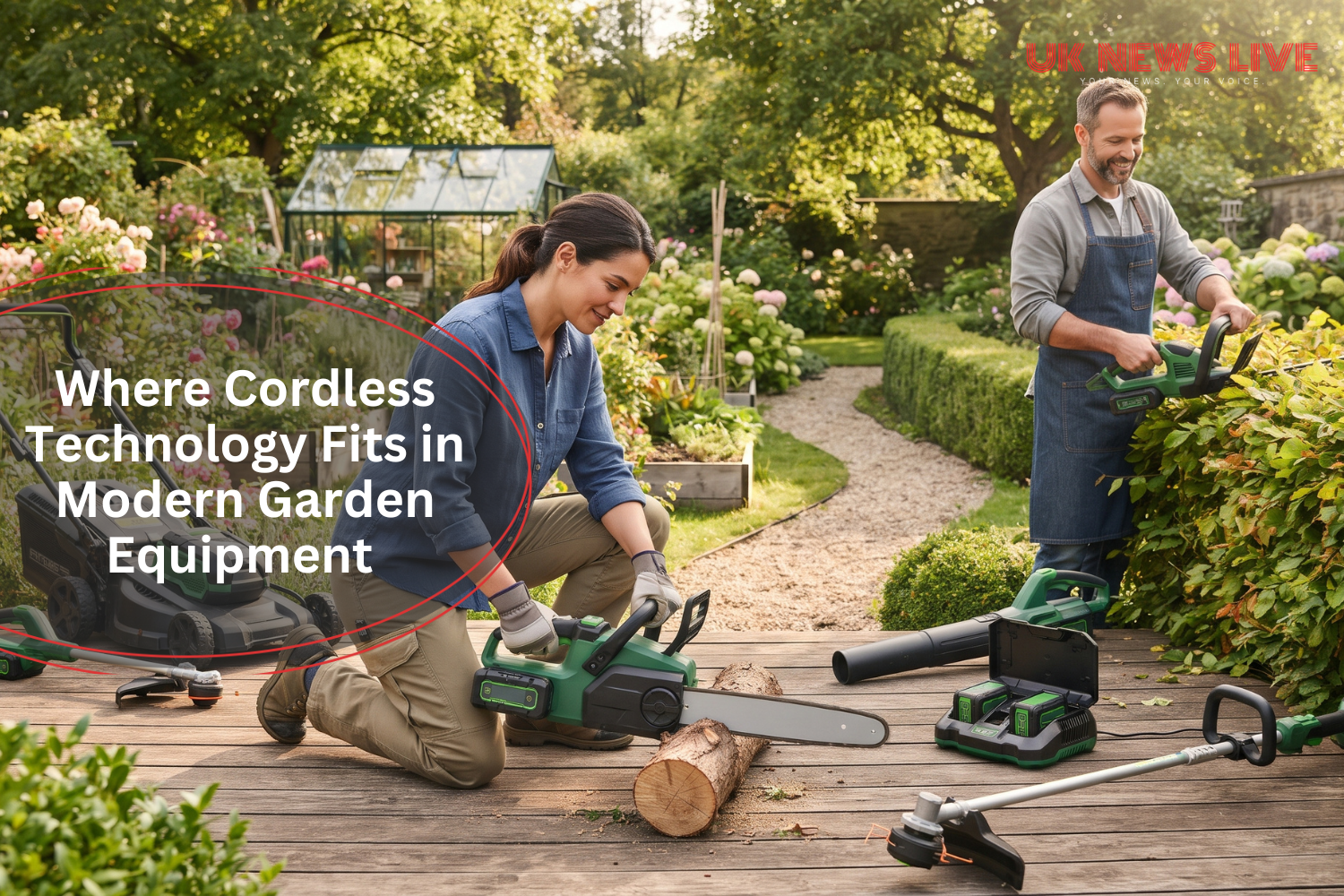
Rechargeable batteries now power a wide range of everyday equipment, including tools used to maintain domestic gardens.
Cordless lawn mowers, blowers, hedge trimmers and chainsaws sit alongside familiar mains and petrol machines.
The interesting question is not whether one power source has won, but where battery-powered equipment makes practical sense and what its limitations remain.
What has changed

Improvements in lithium-ion battery technology, electric motors and electronic controls have made cordless garden tools suitable for a wider variety of tasks. Manufacturers also offer more products within compatible battery systems. These advances do not mean that every cordless machine performs identically: design, battery capacity, workload and conditions all affect the result.
The appeal of shared battery platforms
A compatible battery and charger may be used across several tools within the same manufacturer’s platform. This can be useful for households that maintain lawns, hedges and borders, but it requires careful checking. Batteries from different brands are generally not interchangeable, and even within one brand there can be multiple incompatible systems. Product listings should make kit contents and compatibility clear.
Chainsaws show the trade-offs
The availability of Greenworks cordless chainsaws illustrates how battery power has reached equipment once closely associated with petrol engines. Users comparing models should consider intended work, bar length, weight, chain maintenance, battery requirements and runtime under actual load.
Chainsaws remain hazardous regardless of how they are powered, and appropriate training, protective equipment and safe procedures are essential. Large, unstable or overhead tree work belongs with qualified professionals.
Convenience does not remove limitations

A cordless machine needs no trailing mains cable and produces no exhaust emissions at the point of use. It still needs charging, correct battery storage and suitable handling. Continuous demanding work may require spare batteries or a different power source. The best choice depends on how much ground must be covered and whether charging is available between sessions.
Noise and environmental claims need care
Electric tools often avoid petrol engine noise, but actual sound levels depend on the model and task; users should check product specifications and consider neighbours. Battery manufacturing, electricity generation and end-of-life disposal also contribute to environmental impact. Responsible comparisons should not treat ‘battery-powered’ as proof of zero emissions across a product’s full lifecycle.
What buyers should check

Start with the job rather than the technology. Compare specifications, battery and charger inclusion, weight, warranty terms and availability of service or spare parts. Look for credible independent testing where performance claims matter, and follow the manufacturer’s instructions for storage, use and disposal.
A wider range of choices
Cordless technology offers useful flexibility for many garden jobs, not a universal replacement for every alternative. Clear information about compatibility, performance and safety helps consumers choose equipment that genuinely suits their gardens.