




























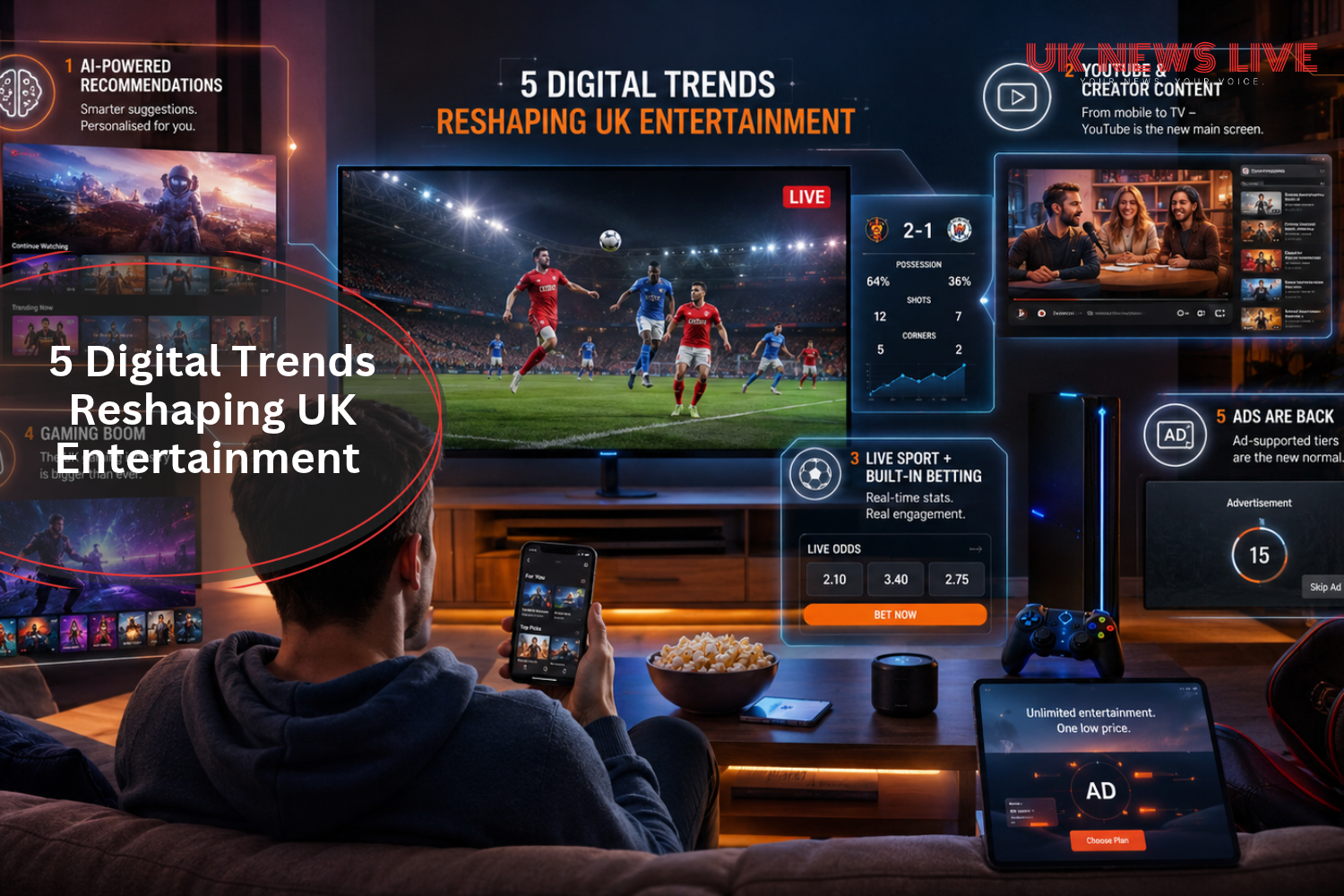
A night in used to be simple. Pick something on telly, stick with it, hope it’s decent. That whole routine has been flipped on its head. UK consumers now bounce between streaming apps, mobile games, social platforms and live sports feeds, sometimes all within the same hour.
S&P Global’s Kagan research found the average UK adult was spending around nine hours a day on digital entertainment services in 2025, up from roughly seven hours in 2021.
So, what’s actually driving it? Here are five trends that explain where all that screen time is going.
1. AI Picks What You Watch Next
 Streaming platforms have been recommending shows for years, but the tech doing the heavy lifting has changed a lot. Netflix now uses a single large language model that replaced hundreds of older recommendation algorithms, and it’s behind roughly 80% of everything members actually watch. YouGov research also found that 46% of UK adults want their viewing experience personalised to them, though only 6% would pay extra for it.
What this means in practice is that two people in the same household can open the same app and see completely different layouts, thumbnails and featured titles. The algorithm will keep nudging viewers towards content they’re likely to finish, which is great for engagement numbers. But it does raise fair questions about whether people end up stuck in genre bubbles, never seeing anything outside their comfort zone.
2. YouTube Has Taken Over the Living Room

YouTube used to be the thing you watched on your phone during the commute. Not anymore. Ofcom’s latest report confirmed that daily YouTube viewing on UK TV sets doubled between 2022 and 2025, jumping from 9 minutes per person per day to 19 minutes. Factor in all home devices and total YouTube viewing hit 41 minutes per person per day.
It’s now the second most-watched video service in the UK, behind only the BBC and ahead of ITV. One in five children aged 4 to 15 go straight to YouTube the moment they switch the TV on as GenZ trends show, and weekly reach among the over-75s climbed from 28% to 33% over the same period. Long-form interviews, creator-led game shows and mini-documentaries have made it look a lot more like traditional television than the cat video platform people remember.
3. Live Sport Now Comes With Built-In Betting
 Live sport still pulls the biggest single audiences in UK broadcasting, and that hasn’t changed. Ofcom found that 85% of sports viewing in 2025 was watched live, and England’s World Cup semi-final against Argentina drew a peak of 24 million viewers across BBC platforms.
What has changed is how fans engage with it.
Betting platforms now run alongside the match stream, offering in-play odds, personalised promotions and free bets timed to specific moments in a game. Bookmakers have also invested in their own live streaming rights, covering horse racing and lower-league football directly through their apps. For a lot of younger fans, checking odds during a match has become as automatic as checking the score.
4. UK Gaming Is Bigger Than Most People Think
 The UK games industry pulled in £8.76 billion in revenue in 2025, growing 7.4% year on year according to UKIE. That makes it the largest games market in Europe and the sixth biggest globally. Mobile gaming accounts for over half of that revenue, and physical boxed games now make up just 5% of total UK games spend.
Subscription services like Xbox Game Pass and PlayStation Plus have changed how people discover and play games, giving access to hundreds of titles for a monthly fee. On top of that, the UK government announced a £28.5 million UK Games Fund in April 2026 to support new studios. The sector now generates an estimated £6 billion in gross value added to the economy each year, which puts it well ahead of industries most people would assume are bigger.
5. Ads Are Back, and Viewers Seem to Tolerate Them

The subscription model that defined the last decade of streaming is being rewritten. Ofcom’s 2026 report noted that subscription streaming presence in UK homes has plateaued at around 70%, and the average household now holds fewer paid subscriptions than it did three years ago. Price hikes have pushed a lot of consumers to rotate between services or drop them altogether.
Platforms have responded with ad-supported tiers. Netflix, Disney+ and Amazon Prime Video all offer cheaper plans with adverts, and take-up has been strong. Broadcaster on-demand services like iPlayer and ITVX grew 9% year on year, partly because they’ve always been free with ads. For most viewers, ads in exchange for a lower price won’t be an exception for much longer. It’ll be the default.
What This Means for How We Spend Our Free Time
The thread running through all five of these trends is personalisation. The show you get recommended, the odds you’re offered mid-match, the ads you’re served, the games that pop up in your subscription library.
Everything is increasingly tailored to you specifically. That’s convenient, and it keeps people coming back. But it also means the old, shared experience of everyone watching the same thing at the same time is becoming rarer, outside of major live events. Whether UK consumers actually mind that trade-off is something the next few years will answer.