






















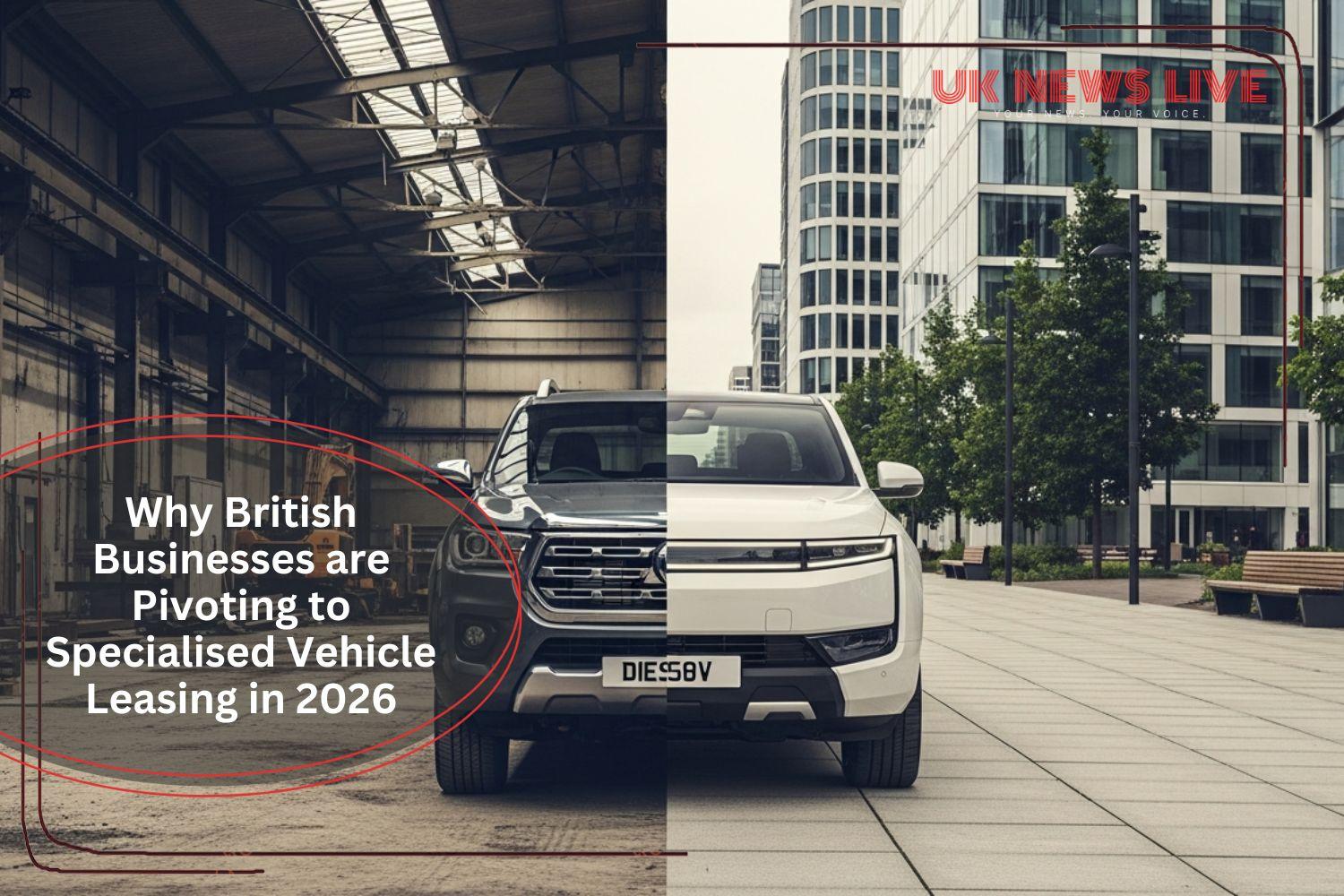
The landscape of British industry is undergoing a significant transformation. As we move further into the decade, the physical tools of the trade, specifically the vehicles that power our logistics, construction, and service sectors, are being re-evaluated.
For many years, the traditional white panel van was the undisputed king of the road. But today, a new contender has solidified its place at the top of the hierarchy: the versatile and high-specification pickup truck.
The Shift Towards Versatile Fleet Management

For business owners and fleet managers, the decision of how to acquire these assets has shifted dramatically. The era of tied-up capital and rapidly depreciating assets is quickly fading, replaced by the agility and tax efficiency of leasing. Nowadays, when modern entrepreneurs search for the best pickup truck lease deals, they’re looking for more than just a low monthly payment. They’re looking for a strategic partnership that allows for effortless scalability.
With the economic fluctuations we’ve seen in recent years, the ability to pivot and adapt your fleet size is a major competitive advantage. That’s where leasing specialists like Commercial Vehicle Contracts have become invaluable, offering the industry expertise needed to navigate a market that’s more crowded and complex than ever before.
Navigating the 2026 Tax and Regulatory Environment
A major driver for the shift towards leasing in 2026 is the recent change to capital allowances. As of January 2026, the UK government has introduced a 40 per cent First Year Allowance for leased commercial vehicles. This is a landmark change, as this type of upfront tax relief was previously largely reserved for purchased assets.
This regulatory shift means businesses can now enjoy the cash flow benefits of leasing while still significantly reducing their taxable profits in the first year of the agreement. It effectively narrows the gap between ownership and leasing, making the latter the more logical choice for companies that prioritise liquid capital.
What’s more, the 2025 reclassification of certain double cab models has made it vital to select vehicles that meet the correct payload requirements to remain tax efficient.
The Multi-Purpose Appeal of the Modern Pickup
Why has the pickup truck become the go-to choice for the modern professional? The answer lies in its dual-purpose nature. Unlike a standard panel van, a modern pickup serves as a rugged workhorse during the day and a comfortable, tech-laden executive transport or family vehicle by evening.
Essentially, the distinction between work and lifestyle vehicles has almost entirely vanished.
Optimising Overheads through Versatility
In the current economic climate, versatility is synonymous with value. A business that can utilise one vehicle for site visits, heavy towing, and client meetings is a business that is effectively optimising its overheads.
With advancements in suspension technology and cabin refinement, modern models now offer an interior experience that rivals premium SUVs. These vehicles are no longer basic trucks. They’re mobile offices equipped with 5G connectivity and advanced safety suites.
Performance and Reliability on Site
Beyond cabin comfort, the mechanical prowess of the modern pickup is a major draw. For companies operating in the utility or construction sectors, the ability to tow up to 3.5 tonnes while carrying a significant payload in the load bed is essential. This capability ensures that a single vehicle can handle the transport of both heavy machinery and essential materials, reducing the number of trips required and boosting overall site efficiency.
Financial Agility and the Power of Leasing
The primary driver behind the surge in leasing over outright purchasing is cash flow preservation. In a fluctuating market, keeping capital within the business where it can be used for recruitment or marketing is simply common sense. Sinking that same capital into a vehicle that loses value the moment it leaves the forecourt is a risk many are just no longer willing to take.
Fixed Cost Budgeting
Leasing offers a fixed cost solution. With a set monthly fee, businesses can budget with precision, protected from the volatility of used vehicle market values. For VAT-registered businesses, the ability to reclaim VAT on monthly payments provides a significant fiscal advantage. Most businesses can reclaim 100 per cent of the VAT on a commercial lease if the vehicle is used solely for business purposes, which is a substantial saving over the course of a three- or four-year contract.
Maintenance and Peace of Mind
Most leasing agreements now include the option for comprehensive maintenance packages. This means that unpredictable repair bills are a thing of the past. For a small business, a single engine failure or a major gearbox issue on a self-owned vehicle can be a financial disaster. With a managed lease, the responsibility for keeping the vehicle roadworthy is shared, and often a relief vehicle is provided to ensure zero downtime.
Sustainability and the Electric Transition in 2026

As we move closer to national net-zero targets, the pickup sector is witnessing a rapid influx of hybrid and fully electric vehicle options. For many, the transition to electric is daunting due to concerns over range and charging infrastructure. Leasing provides the perfect safety net for this transition.
By opting for a fixed-term lease, a business can test the latest electric pickup technology without the long-term risk of owning a vehicle that might have outdated battery technology in a few years. This approach allows businesses to meet their Corporate Social Responsibility goals while maintaining operational flexibility. It also means they’re compliant with the growing number of Ultra Low Emission Zones (ULEZ) appearing in cities across the UK.
Strategic Fleet Procurement for Future Growth
As we look towards the rest of 2026 and beyond, the trend is clear: flexibility is the new stability. Businesses that lock themselves into long-term ownership of ageing, high-emission vehicles will find themselves at a very real competitive disadvantage.
By leveraging the latest vehicle technology through smart financial structures, UK businesses are ensuring they remain mobile and professional. The road ahead may be complex, but with the right vehicle and the right funding method, it’s a road that leads directly to sustainable growth.
Refreshing your fleet means more than simply getting a new set of keys; it means future-proofing your business against regulatory changes and economic shifts.