






















Homeowners across Oxfordshire are increasingly turning to solar panels as a practical and cost-effective energy solution. Installing residential solar allows your home to generate clean electricity, reducing both carbon emissions and reliance on rising grid energy prices.
Oxfordshire’s climate, combined with local planning support and modern solar technology, makes residential solar panels a strong option for many properties. Each system can be tailored to your roof layout and household energy use, ensuring efficient performance and reliable long-term output.
With electricity costs continuing to increase, solar panels offer a clear financial advantage. Alongside lower energy bills, homeowners can benefit from exporting surplus electricity to the grid, improving overall return on investment and making solar a compelling choice for Oxfordshire homes. Here is how it works.
Key Takeaways
- Solar panels offer substantial financial and environmental benefits
- Oxfordshire’s climate supports effective solar energy generation
- Local initiatives encourage renewable energy adoption
- Solar installations can significantly reduce household electricity costs
- Property-specific assessments are crucial for optimal solar performance
Understanding the Investment in Residential Solar Panels in Oxfordshire
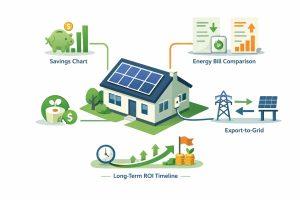
Installing residential solar panels in Oxfordshire is both an environmental and a financial decision. For many homeowners, solar offers a practical way to reduce long-term energy costs while lowering household carbon emissions. Combined with current UK incentives, solar energy has become more accessible and financially viable than ever.
When reviewing solar panel quotes in Oxfordshire, it is important to understand how pricing works and what factors influence overall cost. Solar installation costs vary depending on property characteristics, system design, and component quality, all of which affect long-term value and return on investment.
Initial Installation Costs And Pricing Structure
For an average home in Oxfordshire, the cost of a residential solar panel system typically ranges from £4,000 to £8,000. The final price depends on several key considerations:
- Property size and annual electricity consumption
- Roof layout, condition, and orientation
- Type and efficiency of solar panels selected
- Overall system size and supporting technology
Larger systems designed to offset higher energy use generally involve higher upfront costs but deliver greater long-term savings. Homes with electric vehicles, heat pumps, or high daytime electricity demand often benefit most, as more of the solar energy generated is used on-site. This increased self-consumption helps shorten payback periods and improves overall return on investment.
Factors That Influence Solar Panel System Pricing
Several factors determine how much a solar panel installation costs in Oxfordshire, with pricing influenced by both property characteristics and system design choices.
System size is one of the biggest cost drivers, as larger systems require more panels, higher-capacity inverters, and additional installation time. Panel efficiency and build quality also affect pricing, with higher-efficiency panels offering better output from limited roof space at a higher upfront cost.
Installation complexity, including roof access, layout, and scaffolding requirements, can further increase overall costs depending on the property.
| Factor | Impact On Cost |
| System size (kW) | £1,500–£3,000 per kW |
| Panel quality and efficiency | Around 15–25 percent price variation |
| Installation complexity | Up to 20 percent additional cost |
Expected Energy Output and Performance in Oxfordshire’s Climate
Understanding how solar panels perform in Oxfordshire requires looking at both regional climate conditions and property-specific factors. While the county does not receive the same levels of sunlight as southern Europe, modern photovoltaic systems are well suited to the UK climate and can still deliver reliable, consistent energy generation.
Oxfordshire’s solar potential is sufficient for residential installations to perform efficiently throughout the year, with output varying by season. Typical residential systems generate around 3,400 to 4,000 kWh annually, depending on system size, roof orientation, and shading.
Solar generation is strongest during spring and summer, when daylight hours are longest, while output naturally reduces during autumn and winter. Roof orientation plays an important role, with south-facing roofs generally achieving the highest year-round performance.
| Season | Estimated Share Of Annual Output | Typical Daylight Hours |
| Spring | 35% | 12–14 hours |
| Summer | 45% | 16–17 hours |
| Autumn | 15% | 10–11 hours |
| Winter | 5% | 8–9 hours |
Your solar system performance will vary based on panel efficiency, roof layout, and local shading from trees or nearby buildings. A professional site assessment helps ensure your solar system is designed to maximise output and perform reliably within Oxfordshire’s changing seasonal conditions.
Return On Investment (ROI) From Residential Solar Panels In Oxfordshire
The return on investment from residential solar panels in Oxfordshire is shaped by a combination of upfront installation costs, ongoing electricity savings, and long-term system performance. While solar panels require an initial investment, most homeowners begin benefiting financially as soon as their system starts generating electricity.
Lower reliance on grid power, rising electricity prices, and the ability to earn income from exported energy all contribute to strong long-term returns for Oxfordshire households.
Typical Payback Periods For Oxfordshire Homes
For most residential properties in Oxfordshire, solar panel systems reach payback within approximately 8 to 12 years. This timeframe depends on factors such as system size, household energy usage, roof orientation, and how much solar electricity is used directly in the home.
Homes with higher daytime energy consumption or battery storage often achieve faster payback by maximising self-consumption and reducing grid imports.
Impact Of Electricity Prices On Solar ROI
Electricity price increases have a direct impact on solar ROI. As grid electricity becomes more, each unit of solar-generated power offsets a higher cost, improving overall savings.
This means solar panels become more valuable over time, even after the system has paid for itself, as they continue to protect households from future price rises.
Export Payments & Additional Income
Through the Smart Export Guarantee, homeowners can earn money by exporting surplus electricity back to the grid. While export rates vary by supplier, this additional income helps improve total system returns and shortens payback periods. Export payments are particularly beneficial for homes that generate more solar energy than they export can use during daylight hours.
Long-Term Value Over The System Lifespan
Modern solar panels are designed to operate efficiently for 25 years or more, with gradual performance degradation over time. After the payback period is reached, electricity effectively becomes free, delivering ongoing savings for the remainder of the generated system’s life.
Over the full lifespan, residential solar panels can provide substantial financial returns while increasing property appeal and supporting long-term energy independence.
Conclusion
Solar panels are a strong investment for homeowners in Oxfordshire, offering a practical way to reduce energy bills while lowering environmental impact. With typical payback periods of 8 to 12 years, the financial benefits continue to improve as electricity prices rise.
With the right system design and professional installation, residential solar delivers long-term savings, improved energy security, and meaningful environmental benefits, making it a sensible choice for Oxfordshire homes now and in the future.
FAQs
How Much Do Residential Solar Panels Cost In Oxfordshire?
In Oxfordshire, residential solar panel installations typically cost between £4,000 and £8,000. The final price depends on several factors, including system size, roof layout, panel efficiency, and installation complexity. For many households, a standard 4 kW system costs around £6,000, though homes with higher energy use or limited roof space may require larger or higher-efficiency systems, which can increase upfront costs.
How Much Electricity Can Solar Panels Generate In Oxfordshire?
A typical 4 kW solar panel system in Oxfordshire generates approximately 3,400 to 4,000 kWh of electricity per year. Actual output depends on roof orientation, pitch, available unshaded space, and panel quality. South-facing roofs with a pitch of around 30 to 40 degrees generally produce the highest output, though east-west installations can still perform well when energy use is spread across the day.
How Long Do Solar Panels Typically Last?
Most modern solar panels come with performance warranties of 25 to 30 years. While output gradually declines over time, panels are designed to continue generating electricity well beyond the warranty period. In many cases, systems still operate effectively after 30 years, providing long-term value and ongoing energy savings.
Can Solar Panels Work During Cloudy Or Winter Days In Oxfordshire?
Solar panels continue to generate electricity on cloudy days, although output is lower than in direct sunlight. Modern panels are designed to capture diffuse light, which allows them to perform reliably even under Oxfordshire’s frequent cloud cover. During winter, shorter daylight hours reduce total generation, but well-designed systems still contribute meaningfully to household energy use throughout the year.
Are There Financing Options Available For Solar Panel Installation?
Yes, several financing options are available to help spread the cost of solar panel installation. Many homeowners choose installer-backed payment plans or renewable energy loans offered through major UK lenders. Green mortgage products from providers such as Nationwide and Barclays can also support energy-efficient home improvements, while the Smart Export Guarantee provides ongoing income by paying homeowners for surplus electricity exported to the grid.